
Hyperhidrosis treatment
Excessive sweating (hyperhidrosis) is more than a nuisance — for some people, it continues even after trying over-the-counter antiperspirants. When non-prescription options are insufficient, medically supervised care may be required.
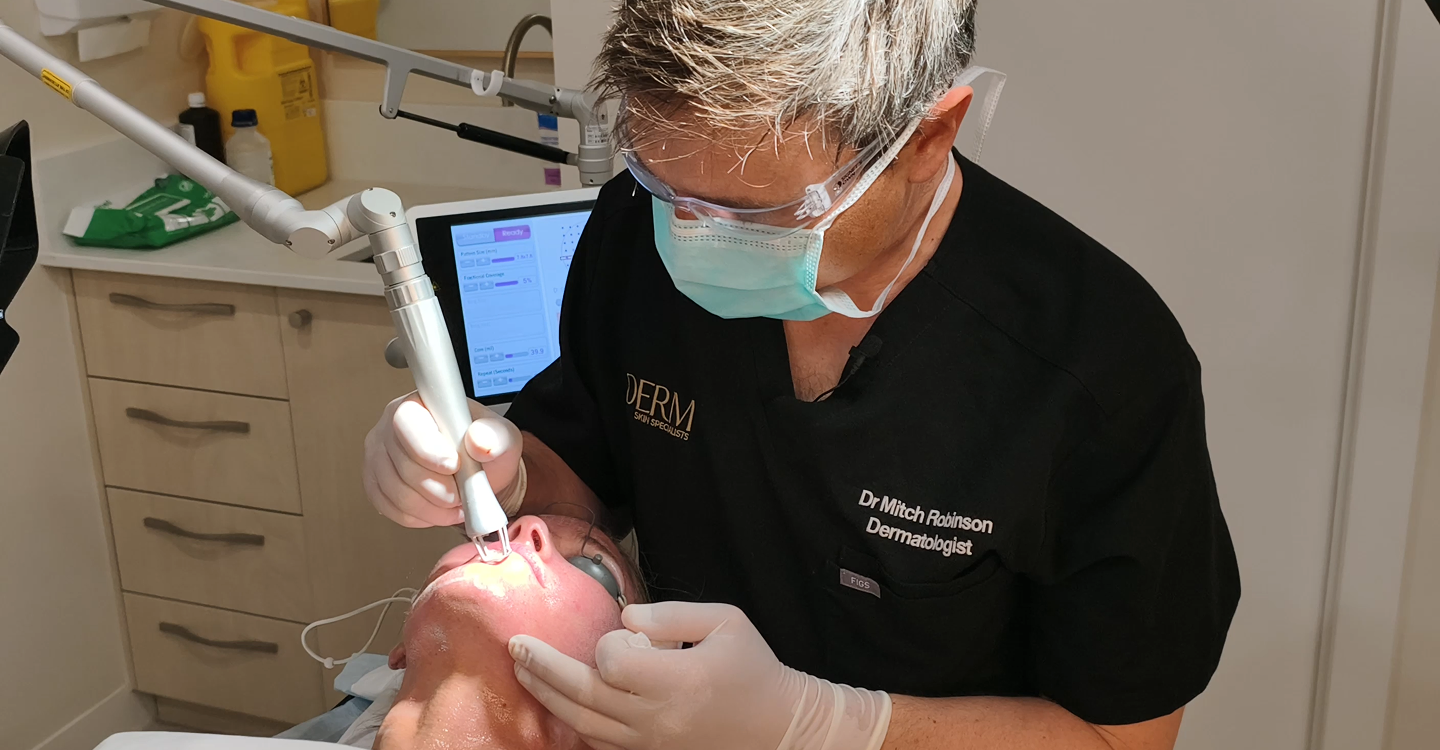
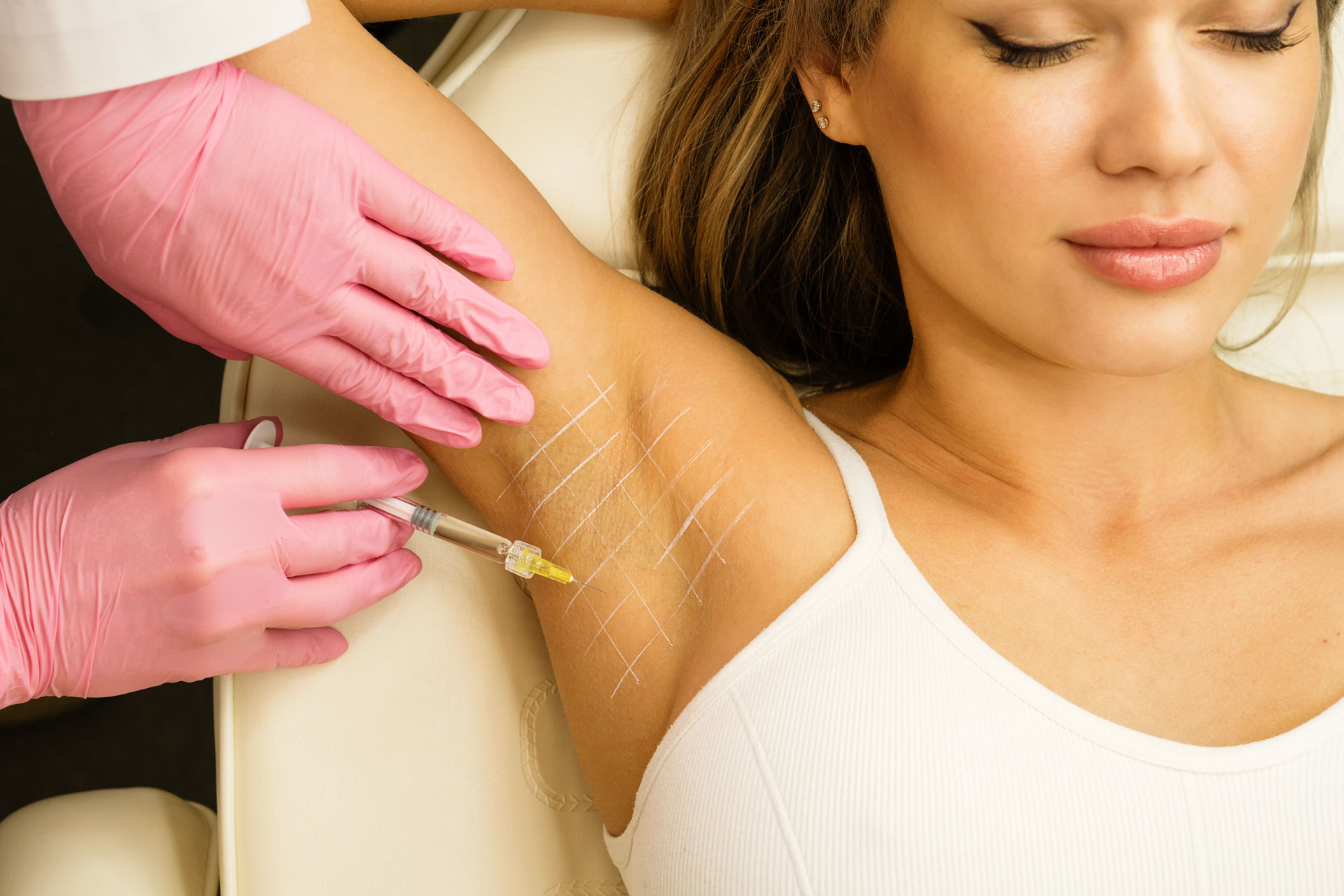
Take a look
At a glance
- Assessment includes both primary and secondary hyperhidrosis
- Commonly affected areas: underarms, palms, soles, face
- We offer a step-wise treatment pathway: topical → device/medicine → injections
- Underarm injections: predictable sweat reduction, same-day recovery
- Medicare rebates apply for underarm injections performed by a dermatologist
- Treatment choice depends on lifestyle, skin type, and goals
Before & afters
Unretouched clinical images. Results vary. All procedures carry risks.

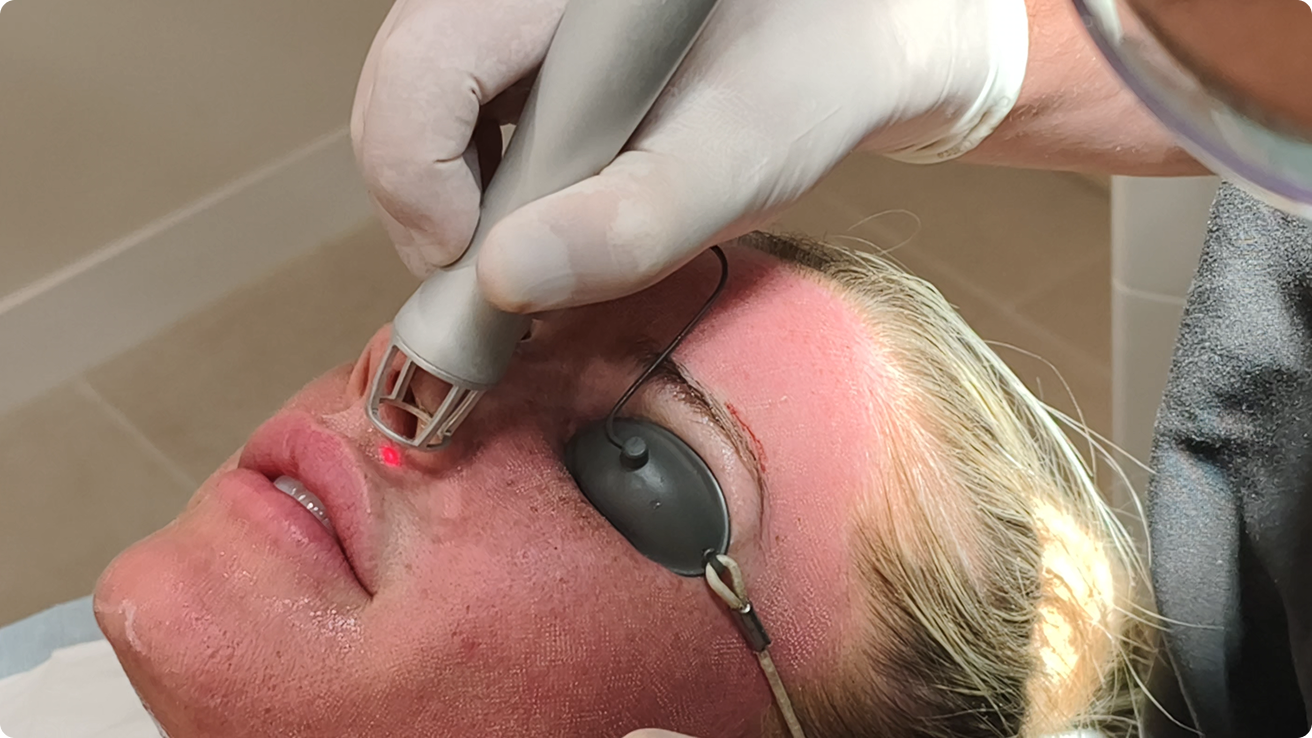
What is Hyperhidrosis?
Hyperhidrosis refers to sweating beyond what is required for normal body thermoregulation. It may present in specific sites (underarms, palms, soles, face) or more generally, and may be primary (idiopathic) or secondary to medications or medical conditions.
When patients continue to experience excessive sweating despite pharmacy treatments, a dermatologist assessment helps determine appropriate next steps.
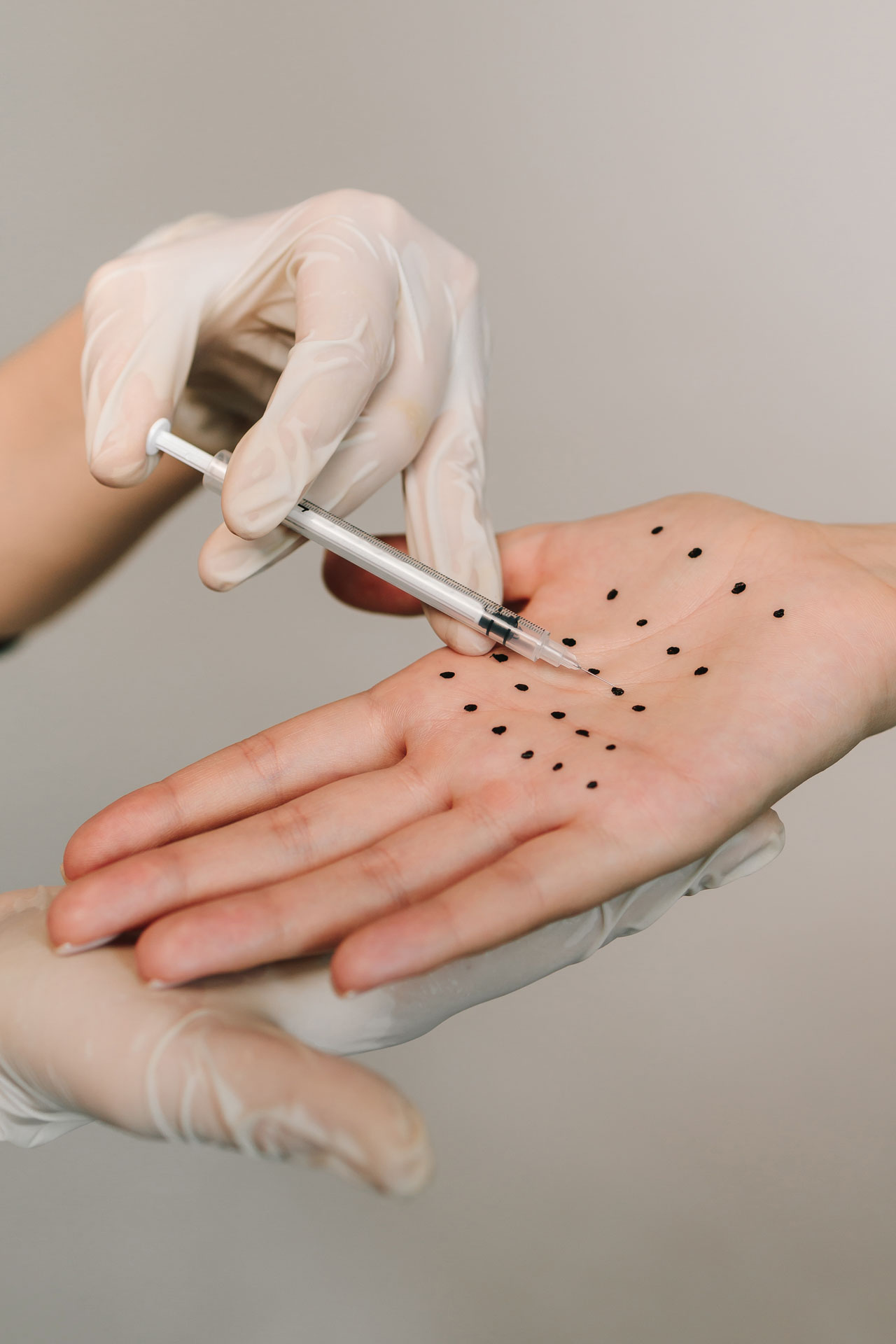
Treatment options
Option
Suitable for
Mechanism
Downtime
Notes in our practice
Final costs depend on treatment area, intensity, and number of sessions. Confirmed after consultation.
Underarm injections
In our clinic:
- Consultation confirms diagnosis, predicts suitability, and provides what to expect
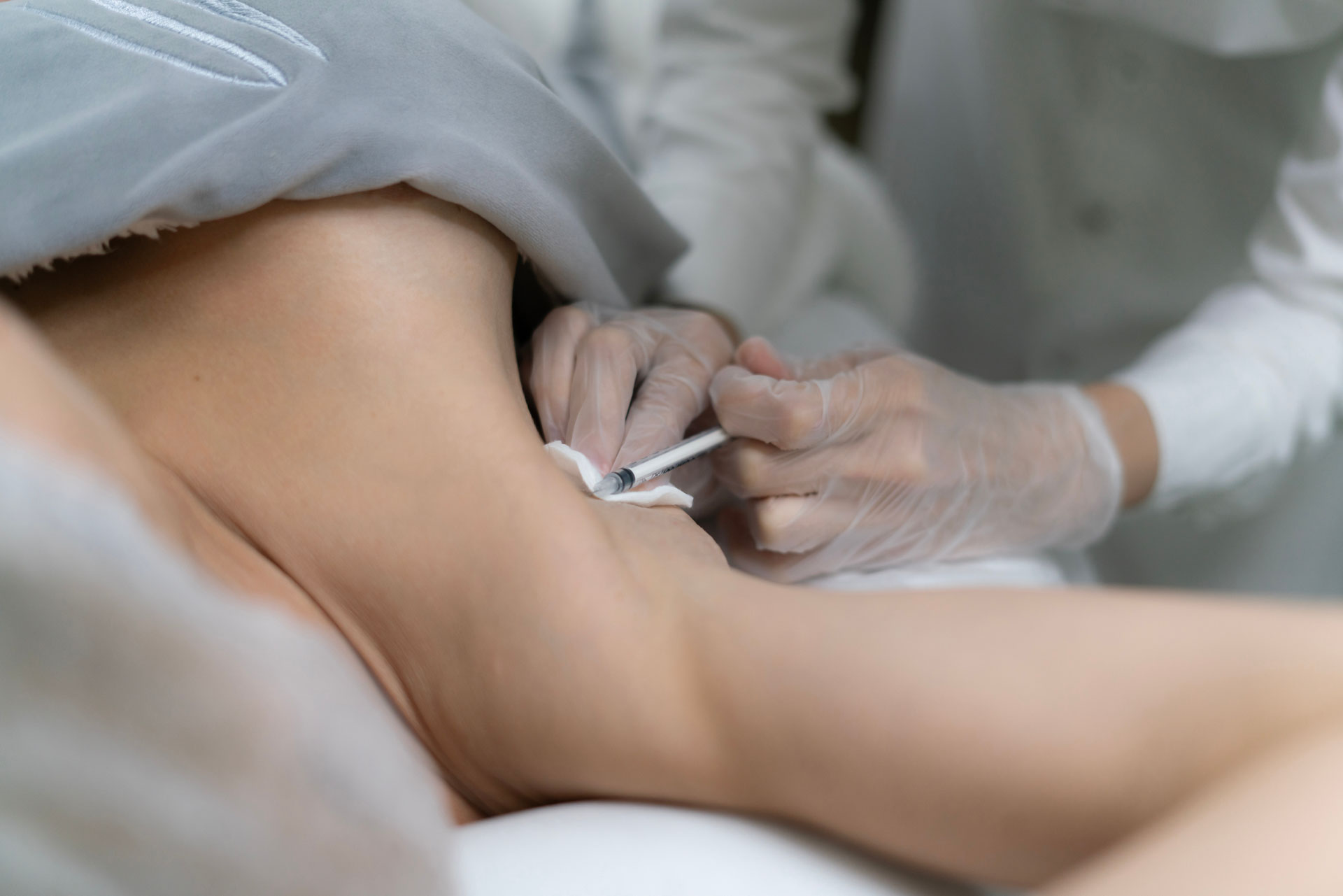
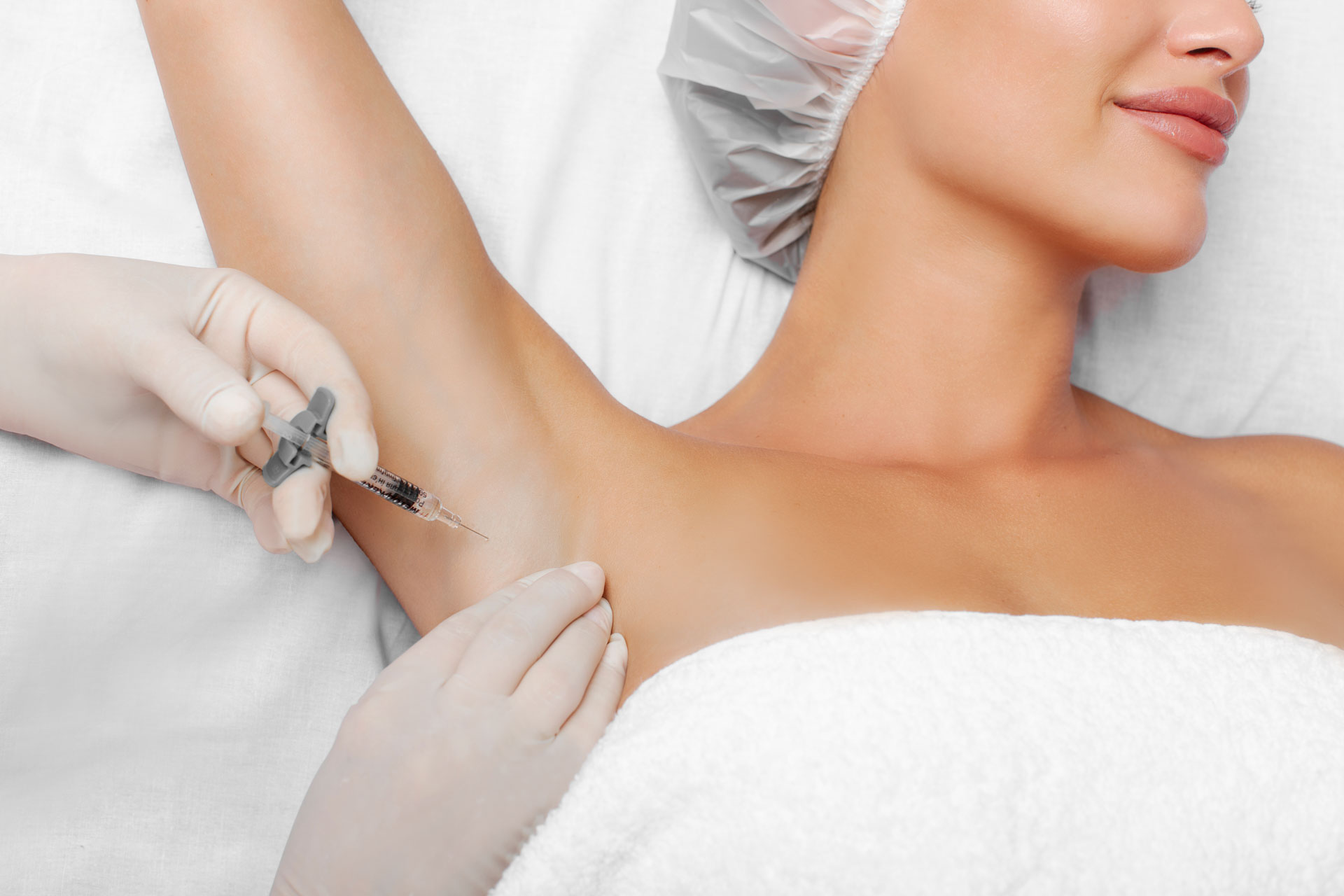
- The underarm skin is cleaned and numbing applied for comfort
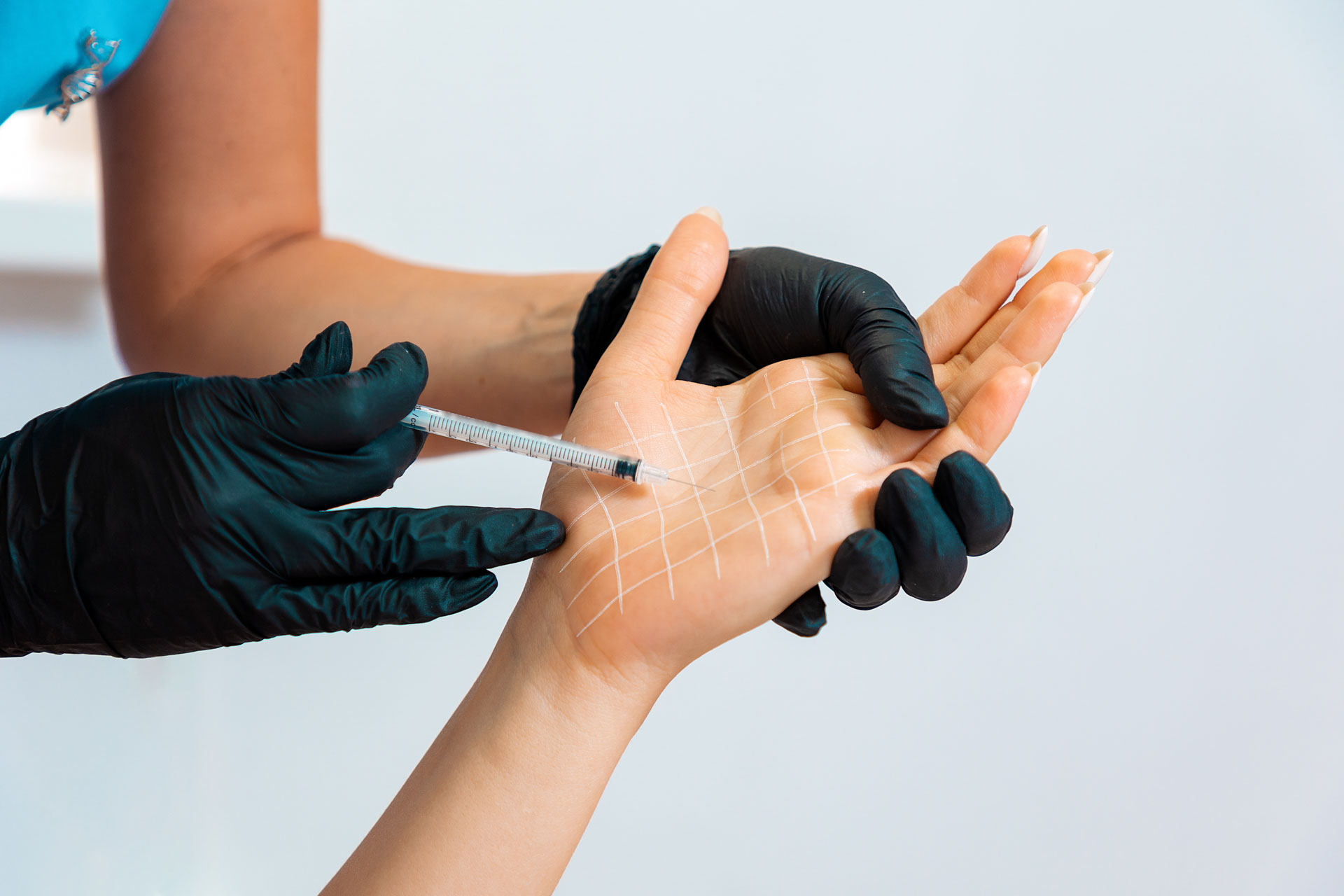
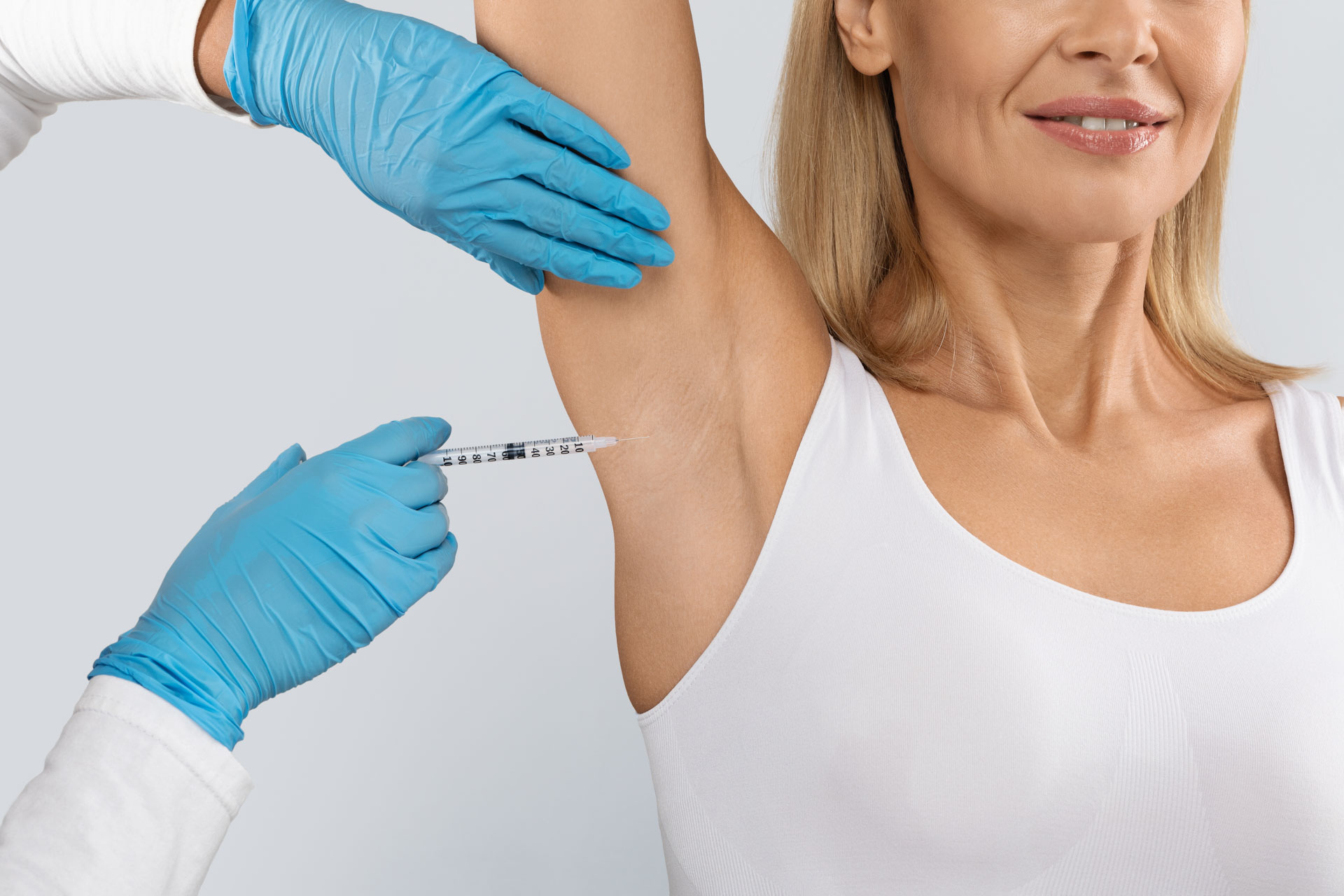
- Injections are placed systematically across the underarm region using a grid approach
- Patients may resume normal activities the same day; avoid heavy heat or intense exercise for 24 hours
- Benefits typically appear within days, peak around two weeks, and usually last 4–6 months before wearing off
- Maintenance treatment is available when effects diminish
Cautions
Safety, risks and cautions
All medical procedures carry risks. Possible side effects include:
- Local pain, swelling or bruising
- Temporary weakness (especially in palm area) — discussed beforehand
- Rare: infection, allergic reaction
- Not recommended during pregnancy, breastfeeding, or in people with neuromuscular disorders
These risks and how to manage them are reviewed in detail during consultation.
The cost
Costs
Treatment fees vary depending on the region treated and the amount needed. Medicare rebates may apply for underarm injections performed by a dermatologist. A personalised quote will be provided during consultation.
Our most commonly asked skin resurfacing questions
Patients often notice benefit in a few days, with peak effect by two weeks. The effect usually lasts 4–6 months before gradually wearing off. Repeat treatment can help maintain control.
Lorem Ipsum
Lorem Ipsum
Lorem Ipsum
Ready to take the next step in your skincare?
Whether it’s pigmentation, scarring, rosacea or skin cancer, we’ll provide a clear diagnosis and a treatment plan tailored to your skin’s needs. Call us today or book a consultation to start your specialist care.